Launching a Strategic Initiative? Here are Three Good Practices

three good program management practices of launching strategic initiativesStrategy involves ambiguity, which has to do with multiple interpretations of concepts and roles.  Different languages and cultures contribute to the ambiguity, and leaders need to engage with their stakeholders to resolve the ambiguity.

This article describes three practical ideas that I observed during the launch of a strategic initiative that involved facilities and teams in Europe, North America, and Asia. The strategic initiative had the purpose of developing a major product platform that included a core technology that would be tailored for local markets.

Practice #1 – Travel the World & Get In Front of Stakeholders

The company established a core team led by a program manager. The program team traveled to each of the major production sites and research site.  One of the core team members started in Paris and traveled eastward to facilities in Japan and Asia, then continued east to North America, and finished her round-the-globe trip by one final leg from the USA back to Paris.

Strategic initiative cross many boundaries and it is important for the leader to see the “ground game” at the local facilities, and to be seen by the local operations so that they have some evidence that this endeavor is truly important to the firm’s strategy.

Practice #2 – Identify Key Contributors & Help Them Step Up

The next two ideas explain what happened when the team reached the production facility in Mexico. I was there, and was lucky to observe the activities involved in the kickoff meeting.

Amy was the strategic initiative’s program manager.  She was joined by several project managers and a representative of the company’s strategic marketing staff. First, Amy and the core team toured the production facility and met some of the key managers and engineers. Next, they assembled in a hotel ballroom, the core team (representatives from the US and France) stood in front of the audience of Mexicans.

Amy’s could not be sure over which of the 40 locals would have involvement. She asked the audience “Who will be involved?” She got no reaction.  So she turned to, Miguel and said this, “Miguel, based on our tour and earlier discussions today, I am pretty sure you are going to be involved with supporting this program.  Could you explain to everyone what tasks you think you will be performing, and what are the major issues you foresee?”

Miguel spoke for a few minutes and answered her questions. Amy then thanked him and made this request: “Miguel, can you indicate another person in this room who you feel will have an important role in achieving this vision?”  Miguel, pointed to Rodrigo, and the process continued.

I thought this worked out quite well in clarifying the emerging roles that each individual would play, and in dealing with the challenges of working in a second language.

Practice #3 – Initial Milestones Are Guidelines; Not Millstones Around Your Neck

The second thing that Amy did quite well had to do with the overall schedule.  She projected a Gantt Chart showing about 5 milestones, and turned to the audience saying:

“This is schedule is the senior management team wishes for a launch date.  Now, it is my job to manage their expectations. What I need from you is your realistic schedule. I don’t want you to try to force a schedule to meet these dates. If your schedule pushes the dates out, we’ll talk and I’ll go back to senior management and reset expectations. Please make sure that you account for risks, and put forth a schedule that you can believe in.”

How can you apply these ideas?

Posted in Examples of Strategic Initiatives, Program & Portfolio Management, Useful Practices & Management Tools | Tagged , , , | 2 Comments

B.A.R.E.D. – Five Domains for Program Management Performance

Wal-Mart Supercenter in Shenzhen, China

Often professional specializations present their discipline with cumbersome conceptual models and jargon.  Their sophistication often gets in the way of communication, and even is counterproductive when the non-specialist comes to view the knowledge as unapproachable or impractical.

Because all strategic initiatives are programs, it is useful for the leader to possess professional-level knowledge of program management. Program management knowledge has been codified by the Project Management Institute in its recently released Program Management Standard – Third Edition.  The book notes five performance domains, which are Strategic Alignment, Stakeholder Engagement, Benefits Management, Governance, and Life Cycle.  Now, do you really want to memorize those five domains?

Leaders find ways to communicate in ways that are easier for non-specialists to absorb, yet maintain the essential characteristics.  My purpose in this article is to give you a memorable way keep five program management performance factors in mind. Here they are:

B – Benefits

A benefit can be either economic or emotive in nature, and should be mapped to stakeholders and the delivery of specific elements of the solution.  They key thing to remember is that benefits are things that are important and motivate stakeholders to support the strategic initiative.

A – Alignment

Here, I simplified strategic alignment to its essence: alignment. Here, the leader take various inputs such as values, mission, vision, strategy and so forth and translates it into the projects and communications that will create and deliver a solution.

As I have discussed in other articles, metrics are the best tool for assuring alignment.

R – Road mapping

I took some liberties with PMI’s use of Program Life Cycle concept.  The life cycle concept is essentially one of laying out a high-level view of the sequencing of decision flows, work flows, and information flows.  In simple term, develop and present a road map so that stakeholder can understand your direction.

E – Engagement

This is a simplification of PMI’s domain of Stakeholder Engagement. In practical terms, the strategic initiative leader needs to understand and attend to stakeholders’ wants, needs, and expectations.  Stakeholders are the ultimate judges of whether a strategic initiative has succeeded.

D – Decisions

PMI calls this domain governance, but most of us find that to be a ponderous term that implies bureaucracy.  In my experience, the key operational factor is decision making; and I have written several articles on how to make fast and effective decisions in this blog.

An Example of Application of the Five B.A.R.E.D. Domains

In 2005, Wal-Mart launched a strategic initiative to transform itself into a worldwide leader in environmentally sustainable operations, and it chose China as a focal point. CEO Lee Scott believed that the program was vital to Wal-Mart’s future success (domain = strategic alignment). The program would touch thousands of suppliers and employees who would need to understand the new business model (domain = stakeholder engagement). An earlier effort to manage five “strategic value networks” had yielded hundreds of ideas for projects, and now they needed to be culled (domain = governance/decisions) into a logical and phased approach (domain = roadmapping/life cycle) that would deliver the benefits that would cause stakeholder buy in (domain = benefits management).

How else can you assure that the strategic initiative applies contemporary knowledge of program management principles?

Posted in Examples of Strategic Initiatives, Program & Portfolio Management, Success Principles for Strategic Initiatives | Tagged , , , , | 3 Comments

Strategy Execution Priority #1: Effectively Communicate Strategic Decision(s)

Executives continually point to the need for better execution of strategy; stated differently, few believe that their organizations do a good job of execution. In a 2005 survey, 197 large-company executives were asked about what needs to be improved most in strategy execution. The answer was,

Steve Jobs at iPad announcement 2010

Effectively communicate the decision(s) made as part of the strategy

Let’s face it: strategies are abstract. Statements of vision and strategic intent are descriptions of future states of the organization. The future is ambiguous. This makes it tough for the front line employees, customers, and other stakeholders to mentally grasp. It is hard to predict their response, but it cynicism and indifference are common reactions.

Here are three examples of where I have seen strategic decisions communicated in thoughtful ways.

  • West Ohio Gas, a distributor of natural gas, decided to make its work force more agile by moving to self-managed teams. The leadership team carefully thought through the decision, hired consultants to teach new skills, and stood in front of small groups of employees to answer each question and concern.  By the time they were done with this process, each employee had the information necessary to decide to support the new strategy, or look elsewhere (several chose to retire.)
  • Domino’s Pizza senior management team needed to convince its franchisees that a new strategy was their support. The strategy involved the Pizza Turnaround, and is described in detail here. The new pizza would take slightly longer to make, use more important ingredients, and had a spicier taste.  Franchisees were skeptical, but Domino’s executives had a strong statistical case about customer preferences, and also provided a blind taste test in the back of the room.  Facts, especially when supported by other experiences, can help stakeholders get on board with the strategy.
  • A CEO of an agri-business counseled his strategic initiative team to develop a message that the team’s actions were part of a back-office process improvement effort. He knew, though, that when the strategy started to “go live” it would set in place a chain of events that would cause some fundamental changes to the business model. He also knew that several powerful executives would fight the initiative if they understood the changes that would come (this large company was controlled by an extended family with cousins battling each other over ego needs). The messages needed to be consistent with existing values.

What’s the “program road map” for the strategic initiative?

Truly strategic decisions cause a cascade of other decisions. For example, if a company decides to enter a new market, it should cause a rethinking of the business value proposition.

My advice is commonsense: think through the consequences of the decision and how that decision impacts the stakeholders. Identify your stakeholders and understand how they will be affected. Communicate to them using benefits statements, and stories.

Be Cautious with Press Releases and Glossy Brochures

Hype can be good and effective. However, there is often a tendency for executives to overdo the PR with with slick messages. There’s a name for this: “cheap talk strategies.”  They often create cynicism, so my advice is to test your messages out on small sample audiences and, again, think it through.

How have you seen strategic decisions communicated? What worked and what didn’t?

Posted in Examples of Strategic Initiatives, How to Improve Your Story Telling Chops, Success Principles for Strategic Initiatives | Tagged , , , | 5 Comments

Strategic Initiatives Case Study: Best Buy’s “Renew Blue” Turnaround

This is article is part of a series describing the turnaround efforts at Best Buy (BBY), focusing on the role of its Renew Blue initiative. Best Buy was once lauded by Forbes (“Company of the Year” in 2004) and Fortune (listed as a “Most Admired Company” in 2006). In recent years, BBY has floundered; the result being precipitous declines in earnings and stock prices. Indeed, its future as a publically-traded company is doubtful; as an entity it may go the way of its vanquished competitor, Circuit City (bankrupt and liquidated in 2009).

Only the coming months will tell if Renew Blue is successful.

As I always, my purpose is to describe useful insights and tools that will benefit strategic initiative leaders.

The Renew Blue Initiative

The color blue is central to BBY’s brand image. It is a common color in the stores and is the color of associate’s sport shirts; hence, the appellation, “Renew Blue.”

BBY announced Renew Blue to the public in an investor’s 55-slide presentation on November of 2012. The reader should note that presentations have the purpose of providing “forward looking” information to investors. It also has a rhetorical purpose of reassuring and building confidence in this group of stakeholders. The Renew Blue presentation is not a management plan.

Turnaround efforts have been underway for some time, so Renew Blue may not be so much of an initiative (the start of something new) as a branding device intended to organize past and ongoing actions into a more coherent and recognizable set of policies.

The Renew Blue Vision

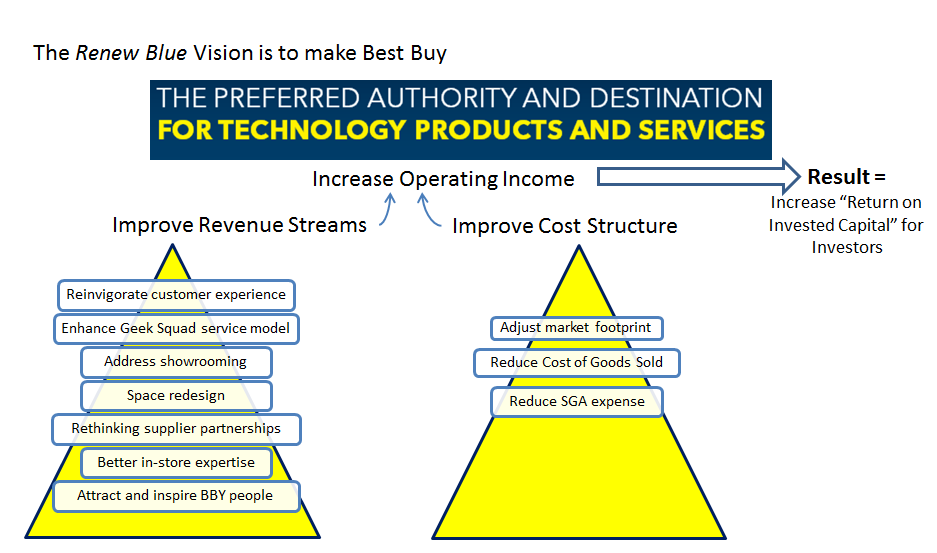
According to the Renew Blue presentation, BBY’s vision is this: “To be the preferred authority and destination for technology products and services.” See the graphic for the strategic pillars for that vision in the context of the business model (this is my interpretation).
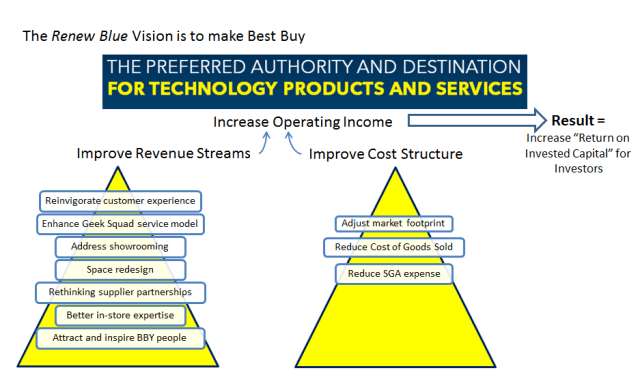
Renew Blue Vision and Business Value Model

Is Renew Blue an Executable Strategy or a Public Relations Spin?

I continually see corporate announcements that purport to be strategic or a strategy, but often these are simply “cheap talk” announcements.  Using Richard Rumelt’s criteria, I find that Renew Blue is a strategy. Here’s my reasoning:

  • There is a competitive diagnosis of the situation.  BBY provides data on its performance versus competitors (warts and all) and arrives at a problem statement, “we have two main problems to solve,” which it states as “declining comps” and “declining operating margin.”
  • Renew Blue has guiding policies to address the challenges it has identified.  Two of them are the intentions to reinvigorate the in-store shopping experience and to reinvigorate the on-line shopping experience.  The company also is addressing its cost structure, moving away from the traditional big box business model (especially for its low-performing stores) and toward a market and store footprint that is more in line with market needs.
  • Resources are being applied and action is being taken. The evidence to support the in-store reinvigoration is visible in the redesign of the retail outlet. The on-line reinvigoration has evidence by the mention of “Renew Blue” in three Director-level job postings on its web site.

Is Blue Renew a Good Strategy?

Given that Renew Blue is an executable strategy, the logical follow-on question is, “Is Renew Blue a good strategy or one that is correct for the situation?”  Here the answer is debatable, and the debate starts with whether BBY has accurately defined the challenges it faces.  Could the stated challenge of “declining comps” and “declining operating margins” be symptomatic of something deeper? Many industry observers are pessimistic about BBY’s prospects.  Consider Standard and Poors’ opinion on BBY in a January 14 analysis,

“We think the consumer electronics retail landscape has too much physical space devoted to a category that is increasingly moving online. We believe BBY will need to make significant changes to its cost structure in order to compete profitably with Internet retailers.”

In a prior article on the Business Value Proposition, I presented a simple evaluation of Renew Blue and its efforts to alter the cost structure. BBY is making progress, but is it quick enough? Megan McArdle’s article in Newsweek provides this rather disturbing-but-vivid image:

Best Buy’s challenge is like that of a trapped animal:
it needs to gnaw off its limbs quickly before all hope is lost
.”

A valid question is this, “Is there a chance that BBY has mis-framed the competitive situation?” The answer is “possibly.”  First, Renew Blue’s lists as its premise #1 in its “investment thesis” that it was market leader in a fragmented and growing market. The growing part of the market is the online space, where Amazon dominates. BBY is the market leader in the shrinking space of big-box electronic retailing. Further, BBY is trapped by fixed costs (real estate leases for its big-box stores), which is the trap that McArdle was referring to in the prior quotation.

Second, BBY benchmarks itself against Lowes, Sears, and Starbucks for customer satisfaction and loyalty; but Lowes and Starbucks are not seeing their basic business model being destroyed by Amazon. (Again, note the caveat that the Renew Blue document has an audience of investors and is not a management plan.)

One final point: The Renew Blue document includes a page titled “Develop a wining online strategy.” Frankly, it is just fluff. Clearly BBY has to execute better than Amazon, but there doesn’t seem to be any evidence that they have a strength to apply over Amazon that they can leverage.  BBY’s on-line weakness is its price; I compared four items and Amazon had lower prices than BBY on three items and the same price on the fourth. If BBY has a winning online strategy, they are keeping it to themselves.

Is Renew Blue a Defensive Action to Gain Time for a Developing New Strategy?

It may well be that Renew Blue is a holding action to stabilize the situation until a new strategy and business model can emerge. After all, the company is has been dealing with turnover in the senior management ranks, and competitive responses are still emerging.

It will be interesting to follow this story. The 2012 holiday season was unremarkable for BBY. Time continues to slipping away, and stakeholders seem to be impatient. BBY needs to get Renew Blue right. If Renew Blue can’t defend against the many strategic headwinds, we may see this mighty and proud organization go private or bankrupt.

As the situation develops, I will update readers on the status of Renew Blue.

Personally, I hope Best Buy is successful with its turnaround. And consistent with the mission of this blog, I will report and analyze the presence or absence of leadership practices within the initiative itself.

Lessons for Strategic Initiative Leaders

Here are some lessons and insights that you might find from this tentative analysis of Renew Blue:

  • Strategy is more than a set of goals; it is a problem solving process designed to produce meaningful advantage on a key competitive dimension
  • Understand the business value proposition
  • Avoid fluff in strategy presentations
  • The vision for a strategic initiative rests upon strategic pillars
  • Develop a brand for the strategic initiative
  • Communications about strategies have different audiences; for example, an investor presentation is different than a management plan
  • In critical situations, sometimes the best you can hope a “holding action” until you can formulate a better strategy

What are your opinions on BBY’s Renew Blue initiative?

Posted in Examples of Strategic Initiatives, Interpreting Strategy Documents | Tagged , , , , , | 3 Comments

The Business Value Proposition

Value Propositions Strategic InitiativesLeaders of strategic initiatives need to have a working knowledge of the various perspectives on value propositions. Why? Because organizations often charter strategic initiatives to close the gap (or create advantage) on value propositions. To reinforce this point, PMI’s updated Standard for Program Management places more emphasis business value realization as a key rational for the use of program and project management techniques.

The term “value proposition” is a bit abstract, and borders on jargon. That probably explains why many managers  shy away from developing them.  As one research study explains,

“Value propositions can be intimidating because they strive to combine small size — often 10 words or less — with a lot of substance. After all, those 10 words are supposed to convey the unique qualities of your company and/or products and services.”

This article identifies two approaches for describing the value proposition, using elements of the Renew Blue strategic initiative at Best Buy as an example.

Business Model Canvas Perspective

Osterwalder and Pigneur’s business model canvas is a useful tool for understanding business models. You can understand the value proposition as the answers to (and optimization of) these two questions:

  • Where does the money come from? What are the revenue streams?  What customers are sought, and how much are they willing to pay?
  • Where does the money go?  What is the cost structure?  What does it cost to serve that customer?

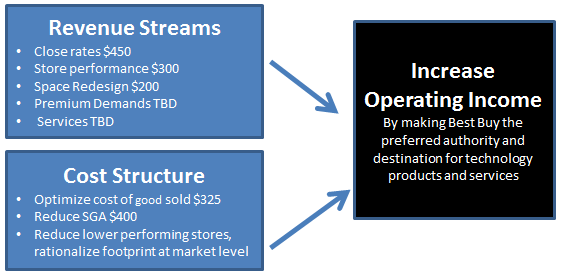
The nearby graphic shows how I interpret Best Buy’s value proposition in its short-term rejuvenation objectives based on the company’s presentation in November 2012.  The data and model are from their communications.

Best Buy Implied To Be Business Model

The VALiD Methodology

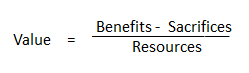
The VALiD methodology (Value in Design) originated with a group of people at Loughborough University in the United Kingdom as a tool for building architects to help project teams understand the issues that are important to their stakeholders. First, you need to understand the values of the stakeholders, then define value in terms of criteria and targets, and then assess the value proposition in terms of benefits, sacrifices, and resources.   See the nearby figure for a generic formula, which is described in the VALiD framework:

Value formula benefits - sacrifices resources
Best Buy is redesigning most of its big box stores as part of Renew Blue and this redesign and associated merchandising hopes to create a better shopping experience.  See the following figure to examine the VALiD framework for the new value proposition. VALiD helps stakeholders express the “get” and the “give” of their value as the benefits they seek from the project, the sacrifices they are willing to make to get those benefits, and the resources then consume in doing so.

Best Buys new business value proposition

The point of this article is to stress that the value proposition is the key results area of competitive performance and provide you with two differing-but-complementary approaches. I provide the examples from Best Buy’s Renew Blue initiative to help illustrate the helpfulness of the tools in generating strategic insight.

Best Buy certainly has a huge business turnaround challenge ahead of it. I will provide more analysis of their approach (from a strategic initiative leadership perspective) in future articles.

Do you agree that value propositions are important? How have you developed them and what do you include in your statements?

Posted in Examples of Strategic Initiatives, Interpreting Strategy Documents, Success Principles for Strategic Initiatives, Useful Practices & Management Tools | Tagged , , , , | 4 Comments

Strategic Thinking: Seven Questions for Your New Year’s Resolution

English: example of using a mindmap in a strat...

Major milestones – such as New Year’s – prompt people to reflect on their current situation, and to look ahead. With that spirit, I recently shared seven questions with several professional friendsIt’s a good message, worth considering by a wider audience…..

….As we transition to a new calendar year, it’s time to ask,

Am I applying strategic thinking to
my career, and to my organization?”

What’s Your Personal Brand? Brands are statements that imply performance and trust. The concept of personal branding consistently resonates with attendees of my workshop Leading Strategic Initiatives (Program Management). You need to proactively get your implied and real promises established in the minds of your audience.  If you don’t establish your brand, others will do it for you (and you might not like the result!) Test your branding out. My brand is: Greg Githens helps executives turn vision into results through strategic initiatives.  What’s your feedback on my branding?

Are you thinking strategically?  Strategic thinkers are tolerant of ambiguity. The very word strategy itself is ambiguous (has many subjective meanings). Do you keep – top of mind –  YOUR DEFINITION of SUCCESS?  Are you looking for small wins to move you toward that vision….. and away from failure?

Are you anticipating opportunity?  I think that 2013 will be a good year for the world economy and for economic growth. I think that there are going to be many new opportunities open up for leaders to take charge of strategic initiatives.

Have you taken the time to reflect on your lessons learned for the year? As I reflect back on 2012, I’m grateful for all of the opportunities given to me for improvement.  I’ve met a lot of really smart, wonderful people; and I’ve grown through the vigorous exchange of ideas.  I’ve coached executives and program managers on several strategic programs, and have gained more perspective on the tools that work.

Do you have stretch goals? My favorite definition of youth is when you think the best is still ahead of you. Old people believe that the best is behind them.

Do you carry a mentality of abundance or a mentality of scarcity? We are lucky to live in this time. While Earth and our societies has many challenges, we are blessed with intelligent and creative people who  are looking to collaborate.

Are you paying forward?  Have you looked into the community for those in need? One of the best things you can do for your career is to get involved in charitable and community leadership positions. It’s probably one of the best ways to learn more about influencing others and positive politics. If you know of a charitable organizations that needs help in formulating and executing strategy, put them in contact with me.

I wish the best of success, however you chose to define it!

Do you agree that strategic thinking is a key to personal and organizational success?

Posted in Strategy, Ambiguity, and Strong-Minded Thinking | Tagged , | 2 Comments

Use Small Wins to Attract Allies To Your Strategic Initiative (and Overcome Shabby Thinking)

Find allies to support your strategic initiative

Find allies to support your strategic initiative

Organizations often use strategic initiatives as a tool for improving operations. The deployed solution typically includes new toolsets and processes that change the flow of work, decisions, and information.

The success rate for these process-improvement initiatives is about 1 in 3. In prior articles, I have described examples of success in product development, healthcare quality, and hospitality. Often the failures are done clumsily, as described in the first change effort in this article describing a tale of two initiatives at Intel.

I find it best to think of tool and process deployment as a social process of adopting an innovation. How do you get employees to adopt the a new toolset or culture? One approach is to invoke top management authority. However, this requires them to apply sustained effort of sponsoring and leading. Because they are busy and easily distracted by urgent business problems, this approach typically leads to floundering.

The bottoms-up  approach of small wins is a useful alternative. A small win, defined by Karl Weick, is a “series of concrete, complete outcomes of moderate importance that build a pattern that attracts allies and deters opponents.” (See Small Wins: Redefining the Scale of Social Problems). This article will help you learn how to attract allies to create small wins, and how to characterize your “opponent” so you can effectively apply deterrence.

Example of Small Wins: Deploying a Risk Management Toolset

I saw a product development organization effectively use a small wins strategy recently.  The organization wanted its product developers to identify and analyze risk better, and it developed tools and training to make this happen. However, many of the engineers and managers were skeptical. They opined that the tools and process were bureaucratic and added little value. Regardless of their opinion, they were willing to attend an awareness-level presentation (one must always show the willingness to try new ideas, right?)

People who liked the tools and ideas had the opportunity to continue learning and practice them.  Those who didn’t have their opinion change were allowed to go their own way. The small win was each individual who returned to deepen their skill and try out the tools. Slowly, the tools and culture adopted the tools, incrementally reaped the benefits of the tools and got the economic outcomes required by its strategy.

The skeptics freely ignored the change, but gradually adopted most of the ideas simply because everyone else was using the language.

How the Strategic Initiative Leader Attracted Allies

The leader attracted allies to gently build a community of risk-management practitioners:

  • He defined the benefits offered to the individuals as well as to the organization. He created simple messages that explained the benefits in both organizational and personal terms.
  • He was authentic in his approach, and that helped him generate trust. Small wins often come from high-quality relationships between individuals. Authenticity and trust are “attractors” of high-quality relationships that create their own positive energy!
  • He encouraged experimentation, so that the tools could be adapted to the organization’s culture.

How the Strategic Initiative Leader Deterred Opponents

His response to the skeptics was simple: don’t force them to do anything, answer questions, and be patient.  An interesting learning is this:

The opponent is not a person, it is a ill-defined ideology.

The word “opponent” is a bit of an overstatement for most internal change efforts.

I spoke with many of the managers who were the late adopters of the tools and process. In this case (and others like it), their resistance was ideological and ill-defined. Usually, people are ambivalent if the change affects others and only oppose those things that they think will affect them personally. These two statements summarize their mental model:

  • “I don’t like the idea of bureaucracy.”
  • “As an individual, I like the idea following my own muse and doing things idiosyncratically.”

This next example reinforces the argument that the opponent is an ill-defined ideology.

F.E.A.R. is False Evidence Appearing Real

Here is another example of how you need to work with opponents on internal-process strategic initiatives…

During an early-state planning meeting, one of the team members declared that fear was a major obstacle.  None of his colleagues challenged or asked for clarification, so I let the statement pass.  A few minutes later he repeated the statement, so I jumped in with a request, “You’ve said twice now that fear is a big issue.  Can you clarify or provide an example of how that affects this strategic initiative?”

He explained that the many of the top executive equated “process” with bureaucracy. Although he didn’t explicitly state that bureaucracy equated to “adds no value and creates burdens,” that was clearly the implication.

I interrupted him with the statement, “F.E.A.R. means  false expectations appearing real.”  That drew a big tension-releasing laugh and one of the other team members said, “That’s good. I’m going to write that down.”

In this example, “fear” really represents a conclusion that the good intentions of the strategic initiative team would result in non-value added activities and unwelcomed self discipline. Here are a few lessons:

  • Fear is a strong word and probably overstates the legitimate anxiety found around any organizational change effort. Base your conclusions on good evidence, not gut feelings!
  • The idea that bureaucracy is non-value added is a half truth.  Don’t let half-truths go unchallenged; over time they become accepted truth!

How have you attracted allies and deterred opponents? Do you agree that the opponent more often an ill-defined ideology, not a person?

Posted in Strategy, Ambiguity, and Strong-Minded Thinking, Success Principles for Strategic Initiatives, Transforming the Organization, Useful Practices & Management Tools | Tagged , , , , , , | 5 Comments

Strategic Initiatives | What Are the Metrics That Matter?

Commitment and alignment are critical success factors for any strategic initiative. Metrics are by far, the best tool for alignment because they create a singular focus on strategic performance outcomes and their enablers.

Leaders of strategic initiatives should regard good metrics as a priority. Metrics will help foster learning, support the strategic initiative story, integrate the many components, and encourage good decision making.

What Makes a Good Metric?

A good metric – or set of metrics – does these six things:

  1. It measures something important. If the word strategic means important, then metrics reflect the imperatives of the individual or the organization.
  2. It has relevance to the audience. Since strategic initiatives have difference stakeholders, one of the biggest challenges is to prioritize the audience and tailor messages to them.
  3. It measures something that is directly controllable by individuals or small groups. This suggests that metrics are local, and connected to action.
  4. It is resistant to gaming. This is the counterbalance to localization; that is, the metric is difficult for self-centered actors to manipulate.
  5. It is a member of a very small, lean set of measurements. Since people have a limited span of attention, we want to keep the metrics to a handful: five to seven metrics is advisable.
  6. The set of metrics includes both leading and lagging indicators. No one drives their car by focusing on the rear view mirror, they look down the road to see the turns and respond to the threats.  This analogy holds well for the set of metrics.

Metrics versus Measures

The concept of metrics is distinct from the term measures. An organization’s accounting system can measure thousands of performance indicators, frequently yielding “measurement clutter.” Thus, the term “measure” is a generic term referring to anything that be captured as a measurement, regardless of usefulness.

A metric is a subset of all measures. It is a measure that is relevant to someone: it has meaning (tells a story) and causes action. A metric is to a measure as information is to data. They are limited in number and effective because they stimulate action.

People have a limited ability to process information, so they employ filtering. A metric is a signal that cuts through all of the noise in the organization. Metrics reflect and reveals people’s values and reward systems; they are part of the organizational culture.

Metrics both reflect and shape the organization’s culture.  People can only pay attention to a handful of things, so the question for any change agent is what metrics are preserved and what new metrics are needed to encourage people to move in new directions.  The metrics that matter are those that are valued by the culture, or believed to be new signals of something important.

Example: What Earns You Your Bonus?

IBM is a company staffed by thousands of accountants and reporting systems many of them involved in measuring individual performance for the purpose of promotions and bonuses.

Several years ago, I was there supporting a strategic initiative that involved improving the new product development process. One day’s task involved helping a group of senior managers understand how project management enabled its product development process to be faster and more productive. The managers listened dutifully and asked many questions. As the day wrapped up, I noticed they were scheduling a follow up meeting to discuss their “game plan.” Was this game plan good or bad?

They explained that every year a new strategy and set of objectives came out of corporate headquarters, and that individual bonus and promotions were tied to the objectives. This group of managers made it a practice to schedule an offsite where they would develop a spreadsheet model. Through their analysis, they figured out how to create the right enablers for that model, so that they could maximize their share of the bonus pool.

These were smart people who cared about their careers. They needed to know what was considered important and how it would be measured, so they could align their actions accordingly.  The commonsense principle,

Tell me what is being measured and I’ll tell
you want people are paying attention to.

Lesson: Never Overlook the Importance of the Individual

When I introduce the principles and practices of metrics to audiences, I ask them to take a moment to think about their performance objectives for the year.  I then ask them to answer this question:

What are the five to seven things that you
must accomplish in order to earn your bonus? How will you measure and report your success with them?

The same principle applies to strategic initiative performance.  What are the five to seven things (including leading indicators) that you – as the strategic initiative leader – need to focus on?

So, What are the Metrics that Matter?

The metrics that matter are those that are relevant to you and your audience. You develop metrics by asking and answering questions such as these:

  • What is our performance gap and how do we define success?
  • What leading indicators are most useful?
  • Who will see the metrics, when, and in what reporting format?
  • Are the chosen metrics effective and impactful?

As an example of a strategic, I’ll return the Domino’s pizza turnaround. One performance gap was to improve sales revenues, and the vision for success was to make a claim that “our pizza tastes best.”  The metric for performance was consumer preferences in a blind taste test, and Domino’s continually tested different formulations to improve its score on that metric. It made its “Oh Yes We Did!” product launch announcement when its metrics supported its advertising claims.

What metrics have you used for strategic initiatives?

Posted in Incremental Benefits Delivery, Success Principles for Strategic Initiatives | Tagged , , , | 4 Comments

S.T.I.C.C. – A Useful Communication Tool for Critical Situations

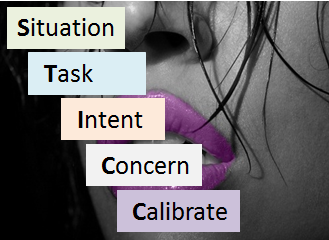
STICC is a useful communication template for situations where time pressures and mistakes can lead to grave consequences. Organizations such as hospitals have trained nurses and physicians in its use and it is also endorsed by US Forest Service fire fighters.

A Project Portfolio Management Example

EAMES (a pseudonym) is a business with over 600 projects underway, each of them labeled “strategic” or “very important.” EAMES has been very successful in its business, with ambitious managers always pursuing new growth. One manager described the company like this, “EAMES has never seen a proposed project that it didn’t like.” During the past 2 years, senior management has grown in the realization that more focus is needed.

The company charted a portfolio analysis team to develop a prioritized list of strategic initiatives. It was successful in collecting data. (Finally, a list of all projects!) The company does not have slack resources to staff all of the proposed initiatives and it does not have a prioritization methodology. Frustration is mounting.

Here is how STICC was used to convey the situation to the CEO. Notice that the statements are kept concise.

Situation & Task

The first step is asserting your opinion: Here’s what I think we face. The second step is your recommendation. Here is what I think is the most appropriate response to the situation.

Application: Boss, Here is the situation that I think we face. After 9 months of work, our team has been unable to gain consensus.  Our attempts to identify screening criteria and the weights have become tedious and have bogged down. Every project is important to someone, somewhere in the organization.

Here is what I think we should do. I think we should work with the Board and the senior-most echelons of management to identify the three types of strategy: corporate, business, and functional. I think we should establish a budget for a strategic initiatives of about 25%, put all corporate ventures and a selected few change-the-business strategies in that bucket. For the short term, no functional initiatives should be considered a strategic initiative.

Intent

The “I” in STICC signifies your intentions. Your goal is to provide the rationale (“here’s why”) for your recommendation.

Application: Boss, the reason why I am making this recommendation is that we are not making the progress that we had all hoped for. We seem to be suffering from analysis paralysis. The crux of the matter is that many managers confuse goal setting with strategy formulation. Until we can gain clarity and educate people, we are better off with a few simple classifications. As an organization, we conceptually understand strategic alignment, but we struggle to translate the theory into practice. It’s like triage on the battle field: we shouldn’t waste scare resources on something that gives no strategic advantage.

Concerns

Here you are providing an understanding of risks and issues that you will face. You are explaining your perceptions of, “Here’s what we need to watch.”

Application: Boss, we need to watch dissention and push back from the VP of Human Resources and the CIO. Both of them have ambitions to deploy new software solutions.

Calibrate

In this last step, you are inviting feedback from the audience. You might say something like, “Tell me if you don’t understand, can‘t do it, or know something I do not.”

Here are some questions you might ask to calibrate: What are the areas of agreement and disagreement? What are the risks, of delay and of impulsiveness? How strong is your support for my recommendation?

You incorporate the feedback, and work to gain agreement on a path forward.

Next Steps after STICC: Listen, Acknowledge and Negotiate a Plan

You can think of STICC as a concise, straightforward way to announce crucial information. The next steps are to acknowledge to the feedback and negotiate an action plan.

As I mentioned in the introduction, STICC is used by a number of professions where miscommunication may cost lives (hospitals and firefighting). The pressure is high, the consequences large. Strategic initiatives may not be life and death, but their lasting impact may be huge.

Where can you apply STICC?

[The source of STICC is Gary Klein, who adapted Karl Weick’s research on High Reliability Organizations.]

Posted in Strategic Planning Issues for Strategic Initiatives, Useful Practices & Management Tools | Tagged , , | 1 Comment

The “20%-of-Your-Time” Rule-of-Thumb

Gaining the commitment of the right resources is arguably the greatest success factor for strategic initiatives.  Let’s say we have identified a competent strategic initiative leader in the organization. Chances are excellent that they have other responsibilities that they can not easily shirk or delegate. Does management make a tough choice, or hope that this person can do it all?

Reality Check: There are (only) 24 Hours in a Day

A practical problem for resourcing strategic initiatives is that the best people in any organization are kept very busy. Everyone wants a piece of their time. And they deserve a personal life, too.

Given this, I always probe for patterns that help me answer these questions:

Can individuals give the initiative more-than-enough time?
Have individuals identified the sacrifice they will make?

I inevitably hear people on the strategic initiative team verbalize this pattern: “This performance gap is huge and needs to be addressed. I am happy to be part of the solution.  But where am I going to find time to participate?”

A Useful Rule of Thumb for Staffing Strategic Initiative Teams

When resourcing of a strategic initiative, follow this rule,

Each key player in the strategic initiative must
devote at least 20% of their time to the initiative.

Everyone has heard (and used) the statement, “I didn’t have enough time” as an excuse. As a reality check, estimate the impact of 20% on a standard work period. Twenty percent amounts to

  • One day per 5-day work week
  • 96 minutes in a 8-hour day
  • Four days per month

I tell people on the strategic initiative teams, “If you can’t find sufficient time, you are not likely to succeed. You and your boss have some tough choices to make.” Another way to frame the issue is, “If you want to be remembered for five things this year, is the strategic initiative one of them?”

The implications resource availability to strategy are huge: If an initiative can’t get the resources, it should not be carried in the portfolio of strategic initiatives. The performance gap targeted by that strategic initiative will not be closed.

Five Challenges for Resourcing a Strategic Initiative

The resourcing headwinds for a strategic initiative includes:

  • Ambiguity about purpose. Strategy is inherently ambiguous. Ambiguity takes different forms, and is uncomfortable to many. Thus, people tend to avoid ambiguity; the consequence being that they don’t readily volunteer effort to the strategic initiative.
  • Novelty. Unfamiliar tasks are more likely to exceed the initial duration estimates.
  • Run-the-business work consumes time. People have many other responsibilities to fulfill in their organization.  This strategic initiative will likely be a part-time effort.
  • Corporate-level budgeting & talent management processes don’t plan with enough granularity. It is hard to know what competencies are needed and difficult to assess their availability.
  • Burn-out and balance of personal life with work life. High performers are ambitious, but face practical limitations on the amount of energy they have and the willingness to compromise health and family.  Unless the individual focuses, they become distracted, stressed, and are strategically ineffectual.

Based on your experience with strategic initiatives, is 20% too high or too low? How does it help force the discussion on prioritization?

Posted in Strategic Planning Issues for Strategic Initiatives, Success Principles for Strategic Initiatives, Useful Practices & Management Tools | Tagged , , | 4 Comments